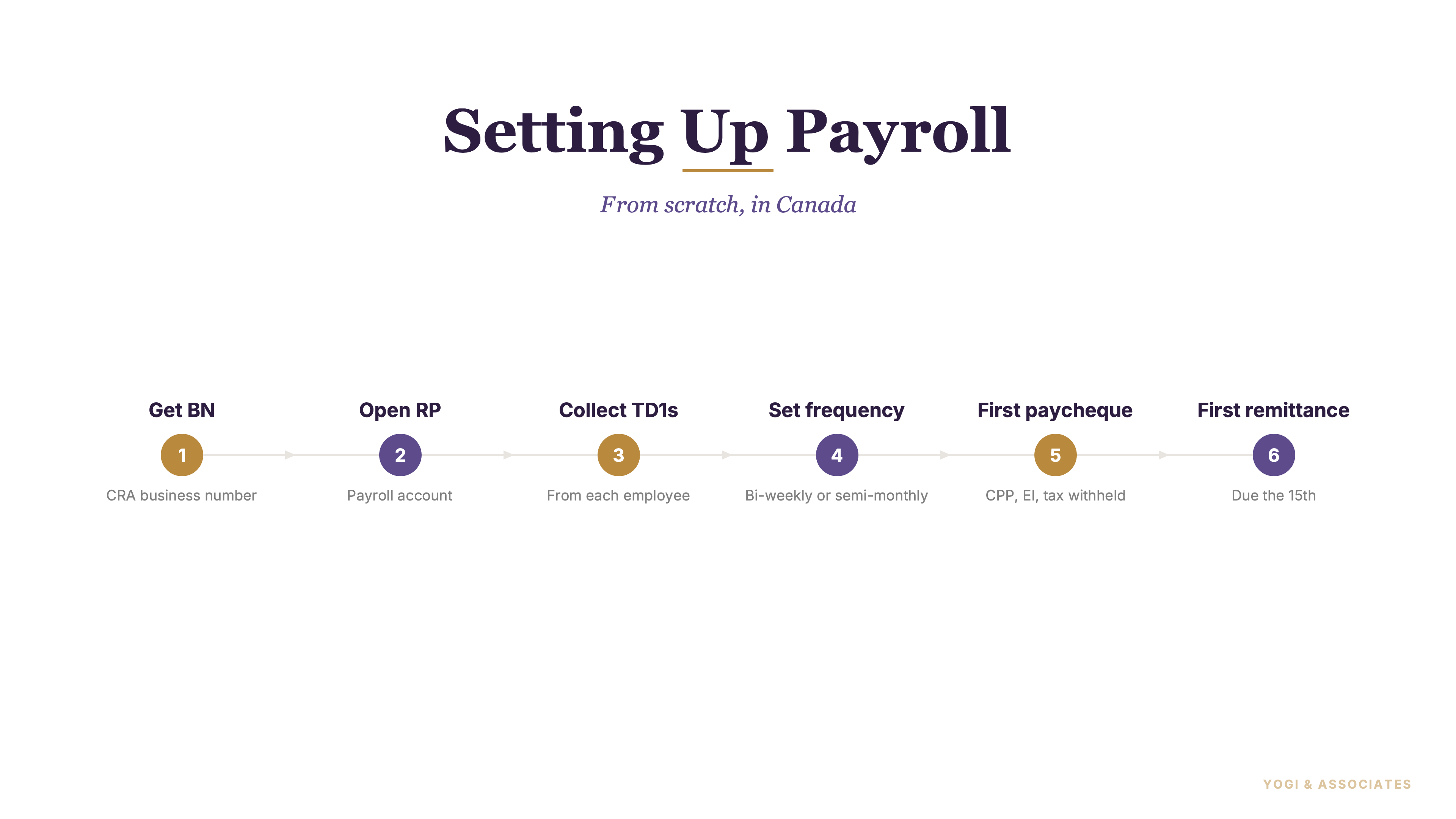
1. Get the BN and open payroll properly
Payroll starts with registration, not with the employee record. If you do not already have a 9-digit BN, get that first.
After that, add the payroll account under the RP identifier so CRA knows you will be withholding source deductions. This is the cleanest first step because every later payroll job depends on the account being open properly.
So do not try to run a first paycheque first and solve the account later. Start with our Canadian payroll guide if you want the big picture around what the RP account is actually for.
2. Set the pay cycle and collect the right forms
Next, choose how often you will pay. Weekly, bi-weekly, semi-monthly, and monthly are all common, but Ontario's ESA still requires at least monthly pay.
Then get the employee setup right. New hires should complete the federal TD1 and the provincial TD1ON so you know how much income tax to withhold.
This is where new employers create avoidable mess. But if you set the pay frequency and forms before first pay, the payroll file starts cleaner and stays cleaner.
3. Handle the provincial setup before first pay
Ontario employers usually have more than one payroll setup item. The big one is WSIB (the Workplace Safety and Insurance Board — Ontario's mandatory workers' compensation insurance for most employers).
WSIB says Ontario employers generally need to register within 10 calendar days of hiring the first worker. And if Ontario remuneration is going to create EHT, the EHT registration deadline is within 15 days of first paying remuneration.
This is the step first-time employers miss most often because CRA gets all the attention. So if Ontario payroll applies, do not treat WSIB and EHT like side quests.
4. Pick software before you try to run numbers
Payroll is one of the last places you should trust a spreadsheet. Most Canadian businesses use software such as QuickBooks Online Payroll, Wagepoint, ADP, or Dayforce to handle deductions and year-end slips.
That does not mean the software thinks for you. It just removes the repetitive math and keeps the records from getting sloppy on week two.
So if you already know you would rather hand this off, our payroll service exists for exactly that point. But even if you do it yourself, pick the system before the first pay date arrives.
5. Run the first paycheque the clean way
Once setup is done, run the first payroll using the actual deduction tools, not a guess. CRA provides PDOC to calculate income tax, CPP, and EI for the paycheque.
Ontario also requires a written pay statement for each pay period showing gross pay, deductions, and net pay. This is a great early control because it forces you to see whether the payroll actually makes sense before money leaves the account.
Plus if you want the rate side refreshed, our CPP guide is useful beside the first payroll run. But the main point is simple: calculate, review, and then pay.
6. Do not miss the first remittance
The first remittance matters more than most new employers think. CRA's regular remitter schedule means payment is due by the 15th day of the month following the month you paid employees.
For many new employers, that is the first timing rule that really matters after the first payroll run. This is where a decent setup either proves itself or falls apart.
So keep our CRA remittance deadline guide nearby. In our view, the first missed remittance is how a lot of otherwise normal payroll files turn expensive.
7. Build a small control system from day one
Once payroll exists, the goal is boring consistency. Save TD1 and TD1ON, save WSIB and EHT registration details, save remittance confirmations, and review payroll reports after each run.
And set reminders for remittance dates, year-end slips, and any worker status issues before they become CRA problems. First-time employers do best with a small checklist, not a heroic memory test.
So if payroll is about to start and you want it right from the beginning, keep the process simple and documented. In our view, clean setup beats clever cleanup every time.
First payroll is much easier when the setup is done properly before anyone gets paid. If you want help building that system from day one, we can help.
Book a Free Consultation