1. What reconciliation actually does
Reconciliation is just matching, but the discipline matters. You compare every transaction in the books against the bank statement and explain why the ending balances differ or agree.
But the real purpose is confidence. owners sleep better once they know the books agree to the bank and not just to a guess.
This is the bookkeeping habit that turns scattered records into usable numbers. Our bookkeeping guide is the wider framework if you want the whole system around it.
2. Why it matters more than owners think
Reconciliation catches the boring mistakes first. Missing deposits, duplicate entries, forgotten bank fees, and transactions posted to the wrong account all show up here.
And it also catches uglier things. We've found reconciliation is often the first place unauthorized withdrawals, bank errors, or stale uncleared cheques get noticed.
unreconciled books are just an argument waiting to happen. It is impossible to trust the reports if the cash accounts are still loose.
3. The seven-step process
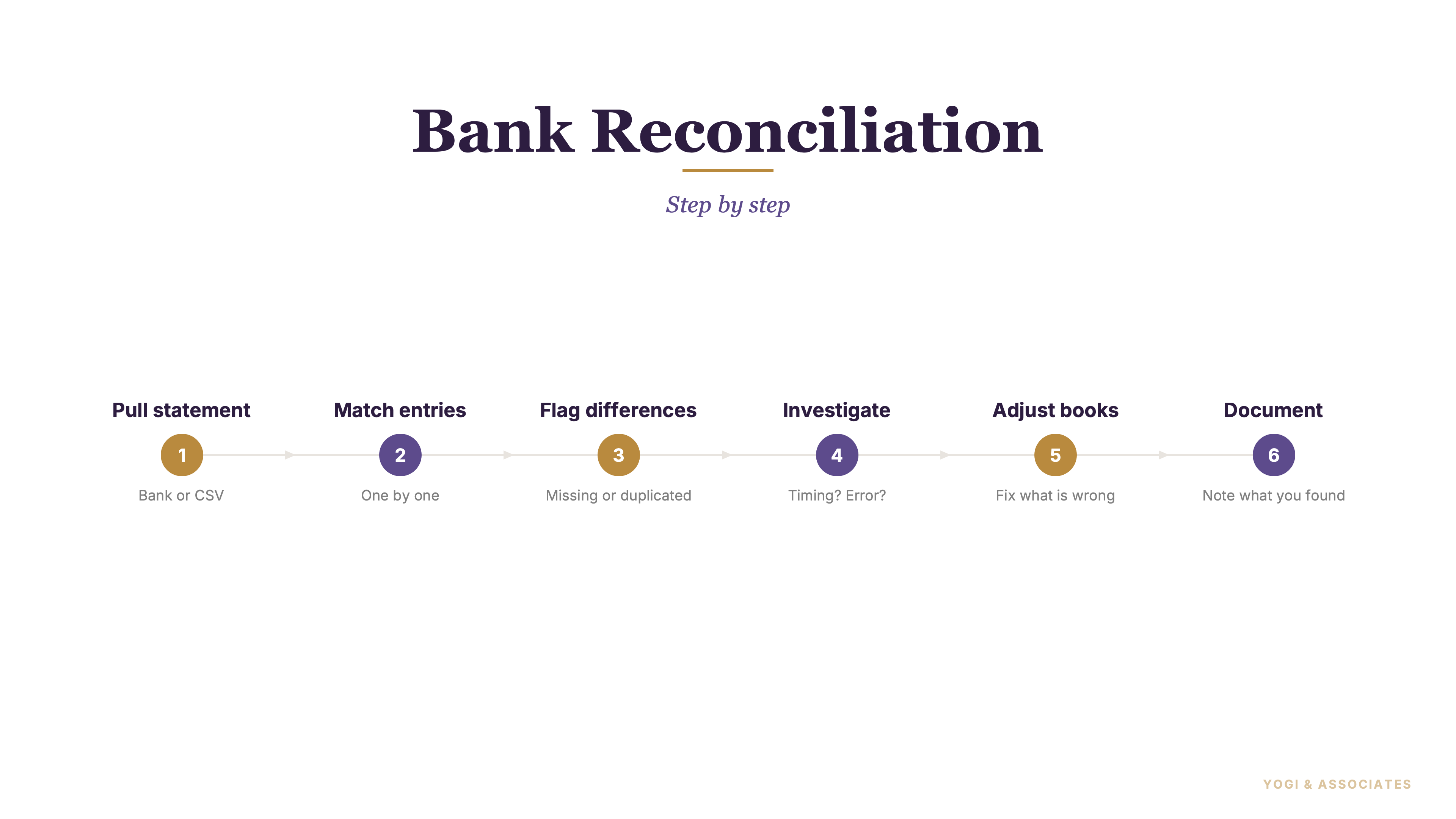
The process is simple if you do it in order. Get the bank statement, open the reconciliation screen, and enter the statement ending date and balance exactly as the bank shows them.
Then clear every matching transaction in order, investigate every difference, post the missing items like fees, interest, or NSF entries, and keep going until the unreconciled difference is zero. So the job is not done when you are tired. It is done when the difference is zero.
Owners overcomplicate this step. the cleanest reconciliations come from doing the same sequence every time with no improvising.
4. The most common differences you will find
Most reconciliation problems are familiar once you have seen them a few times. Deposits in transit and outstanding cheques are timing differences, not failures.
But bank fees, interest, reversed deposits, and NSF returns are different because they usually are not in the books yet. So they need real entries, not just a note in your head.
We've found businesses waste a lot of time chasing normal timing differences while ignoring the actual missing entries. The thing is, the weirdest unreconciled number is often something ordinary hiding in plain sight.
5. How to fix them without making a mess
Do not force the reconciliation with a random plug entry. That fix usually becomes next month's problem.
Instead, identify what the difference actually is. Plus if the issue is a missing fee, interest charge, or NSF reversal, post the proper transaction with the right date and account before you finish the month.
This is where patience saves hours later. Our monthly bookkeeping checklist helps because reconciliation works best when it lives inside a repeatable month-end routine.
6. What software does and does not do
Modern software makes reconciliation faster, but not automatic in the full human sense. QuickBooks says it can connect bank and credit card accounts, import transactions, and help you match them inside the books.
QuickBooks also has a reconciliation feature that walks you through the statement balance and the cleared transactions. But the software still depends on you to review the matches and deal with the real differences.
Software is best at removing typing, not judgment. Our QuickBooks setup guide matters here because good reconciliation starts with a clean bank feed and clean account structure.
7. How often to reconcile
Most small businesses should reconcile monthly. High-volume files often deserve weekly attention.
Once a year is too late for this kind of work. CRA still expects the records behind the books to be retained, and those records support the returns your accountant files.
Businesses that are far behind should stop promising to catch up alone. If the file has drifted for months or years, our catch-up bookkeeping service is usually the smarter path than trying to brute-force your way back to clean books.
Bank reconciliation should feel routine, not mysterious. If you want the books brought back to zero cleanly, we can help.
Book a Free Consultation