1. How CRA assigns your reporting period
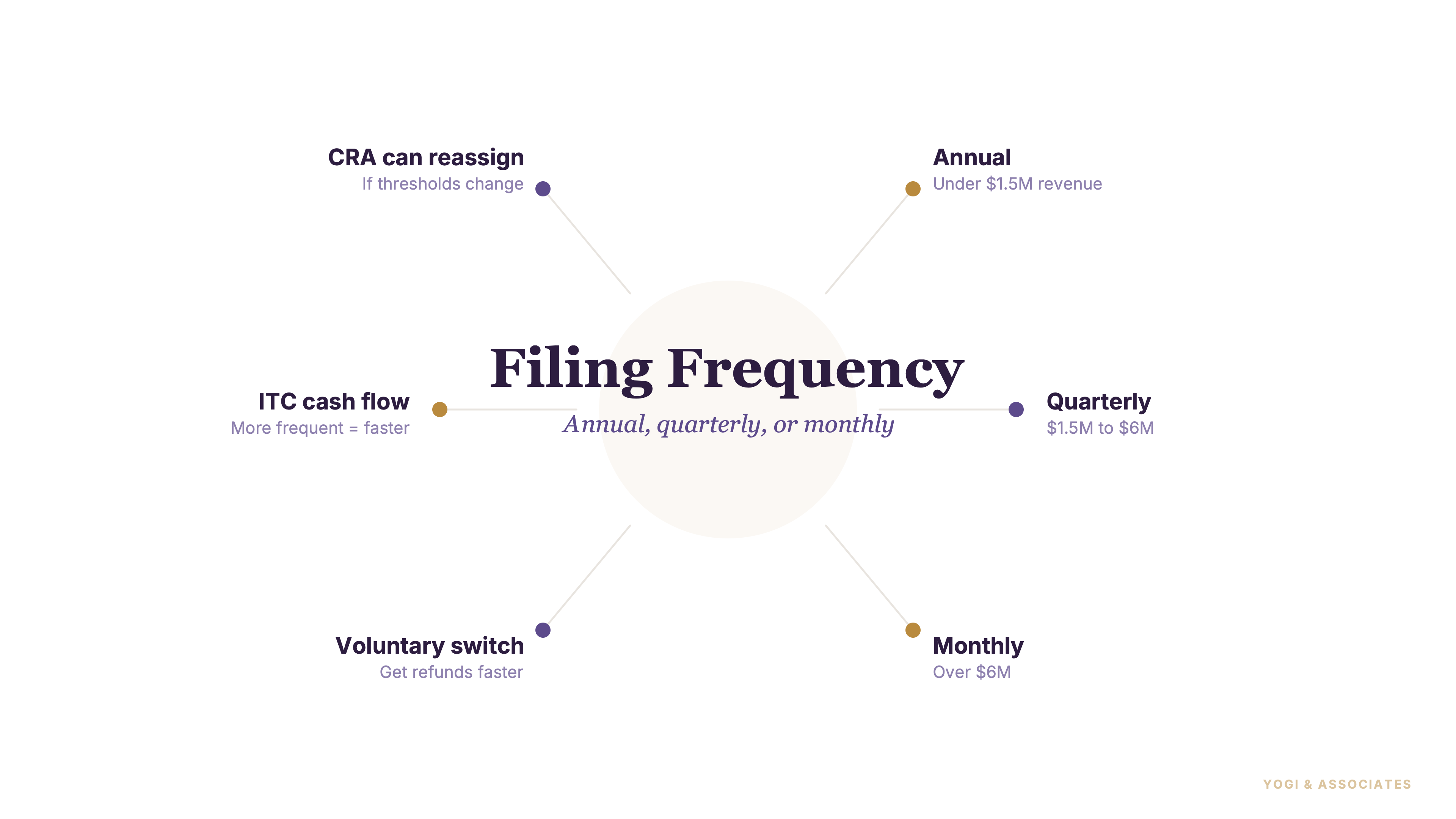
A reporting period is the chunk of time your HST return covers — monthly, quarterly, or annual. CRA assigns it based on annual taxable supplies, including those of associated persons.
The thresholds are blunt. Annual at $1.5M or less, quarterly from $1.5M to $6M, monthly above $6M. Most Ontario small businesses land in the annual bucket by default.
This is the first thing every registrant should memorize. If you want the wider system around it, start with our GST/HST guide.
2. What annual, quarterly, and monthly really mean
Annual means one return for the fiscal year. Quarterly means four. Monthly means twelve.
The real difference isn't paperwork. Frequency changes how long you hold collected HST, how quickly you recover ITCs on business purchases, and how often you're forced to close the books properly.
That makes it partly a compliance decision and partly a cash-flow decision. Which is why the right answer can differ from one business to the next, even with similar revenue.
3. Choosing a more frequent period
If CRA assigns annual or quarterly filing, you can elect a more frequent reporting period using Form GST20 or through My Business Account.
You can't just pick whatever pace feels best. CRA allows a less frequent period only in narrow cases — including after 12 months if your taxable supplies fall below the threshold for the assigned period.
Elections have timing rules too. In most cases, the election must be filed no later than 2 months after the day it's supposed to take effect. Miss that window and you wait another reporting period.
4. Why some businesses choose quarterly
Here's the Y&A heuristic in one paragraph. Quarterly if you're refund-heavy, still catching up on books, or need the cash-flow discipline of closing the books every three months. Annual if your net HST is stable, your books are boring, and you don't need the refund back fast. Monthly almost nobody picks on purpose — CRA assigns it once annual taxable supplies pass $6M.
The main reason to elect quarterly is refunds. If your net tax is regularly negative, CRA owes you money instead of the other way around. Businesses in a recurring refund position almost always prefer quarterly because waiting a full year to recover ITCs ties up real cash.
So if you're buying equipment, carrying real input tax credits, or staying in refund territory, quarterly pays for the extra admin. Our ITC guide matters here — faster refund timing only helps if the claims are actually clean.
5. Why others stay annual
Annual filing is still the right call for a lot of owners. One return a year is simply easier to live with when the books don't fight back.
Small businesses in a steady net-owing position often prefer annual because it cuts the compliance burden. The trade-off: bookkeeping problems can pile up for twelve months before anyone notices. One bad GST/HST rate or a missing receipt trail in January isn't caught until the following spring.
Annual isn't lazy or wrong. It's lighter on admin when the books are under control and refunds aren't the main story. If they are, quarterly wins.
6. Instalments and filing deadlines
An instalment is a quarterly prepayment toward your annual HST balance, due before your return. Annual filers usually have to make quarterly instalments if net tax in the previous fiscal year was $3,000 or more. Most annual filers we see with growing revenue get caught by this one.
Instalments are due within one month after the end of each fiscal quarter. Monthly and quarterly filers have a different system: their filing and payment deadline is one month after the reporting period ends.
Annual filing has its own split too. If your fiscal year-end is December 31 and you have business income, payment is due April 30 and filing is due June 15. Other annual filers usually have filing and payment due three months after fiscal year-end.
7. Fiscal year-end and net tax
Your reporting period doesn't float on its own. It follows your fiscal year, which is why annual filers report once per fiscal year and shorter periods line up with fiscal-year quarters or months.
The return math is simple on paper. Net tax means GST or HST collected minus ITCs and adjustments. Positive result: you owe. Negative result: CRA refunds.
Frequency decisions make more sense once you know which side of that equation you usually land on. If you still need to register or change your setup first, our GST/HST registration guide is the right next read.
Filing annually when you should be filing quarterly is one of the easier cash-flow mistakes to fix — if you catch it before the next return. We review filing-frequency elections for GTA owners every week, usually in the same call we look at ITCs and deadlines.
Book a Free Consultation