1. What DIY bookkeeping actually means
DIY bookkeeping is not just typing expenses into software. It means coding transactions, reconciling accounts, reviewing HST, cleaning odd entries, and staying current every month.
And it also means carrying the mental load. the time drain is not just the clicks inside the software. It is the constant background feeling that the file might be wrong.
Owners underestimate that cost badly. The thing is, bookkeeping done by the owner usually steals attention from work only the owner can do.
2. When DIY is still a good idea
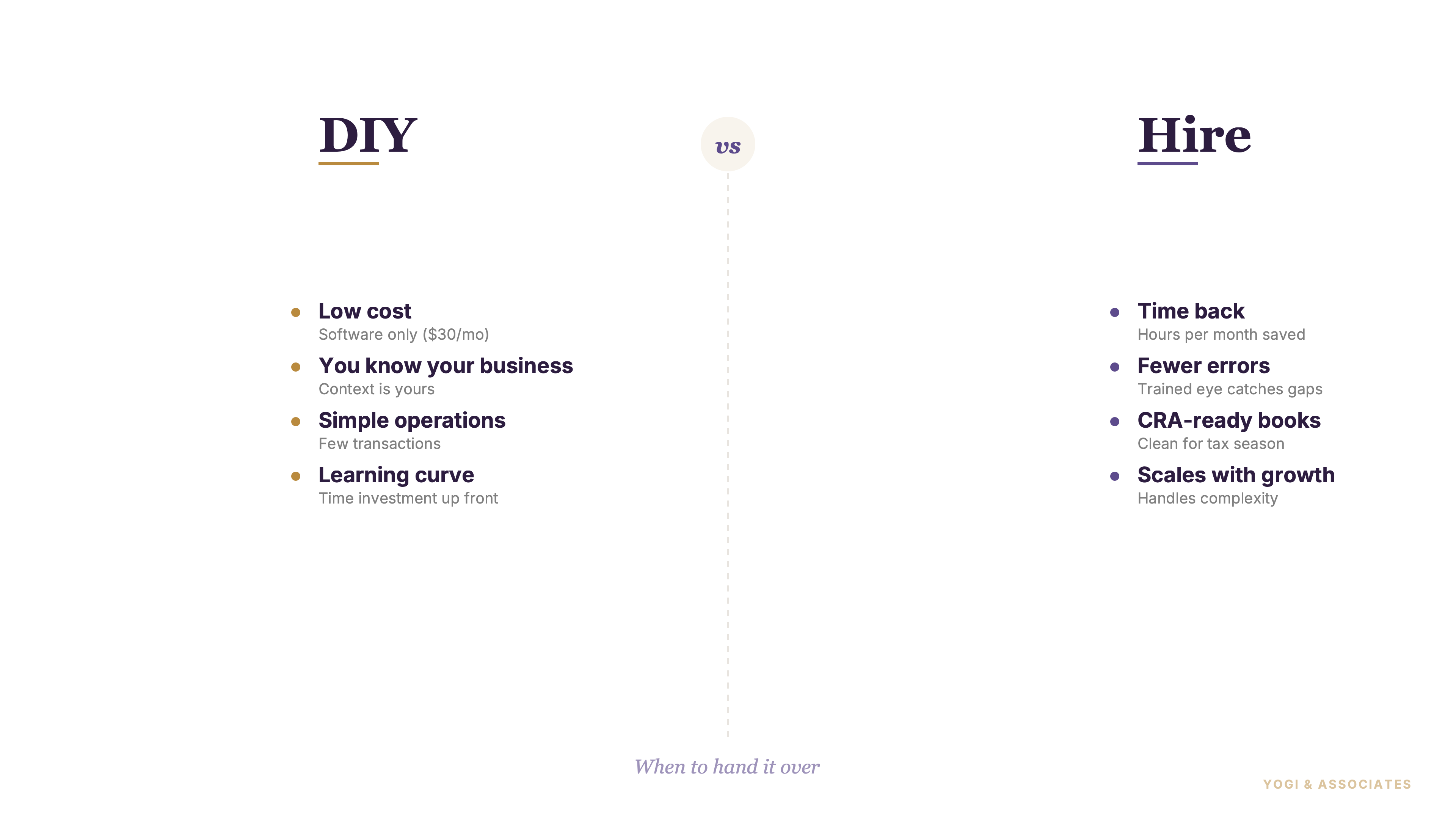
DIY can still make perfect sense. A single-owner service business with low transaction volume, no payroll, no inventory, and decent software habits can often manage it internally for a while.
But the owner has to actually do it monthly. So if you are organized, comfortable with the software, and willing to keep learning, DIY may be the right choice for now.
DIY works best when the business is still simple and the owner genuinely likes detail work. if you already hate the bookkeeping by month two, that is your answer.
3. What a bookkeeper does versus an accountant
The line is simple in theory, even if firms blur it in practice. A bookkeeper handles the recurring monthly work, while an accountant (CPA — handles tax preparation, year-end reporting, and advisory work — usually annually) usually takes over for year-end tax and higher-level planning.
So bookkeepers usually keep the books alive, current, and usable. But accountants usually step in later, once those books are meant to become tax filings, year-end statements, or advice.
Businesses get into trouble when they expect the accountant to do monthly cleanup for free at year-end. that is where the year-end bill starts getting ugly fast.
4. The signs you have outgrown DIY
Payroll is a big sign. HST is another one.
Multiple bank accounts, multiple revenue streams, inventory, fast growth, contractor payments, and owner time pressure are the rest of the usual list. Plus once the file starts falling behind, every new month gets harder than the last one.
The outgrown-DIY moment comes earlier than most owners admit. If the business is growing but the books still live on late-night catch-up, you are probably already past the line.
6. The hybrid middle ground
It is not always all or nothing. A lot of businesses land in a middle model.
So the owner can still raise invoices, scan receipts, and stay close to the numbers, while a bookkeeper reviews monthly, reconciles properly, and handles HST filings. But that only works if each side knows exactly what they own.
The hybrid model is underrated. it gives owners control without forcing them to become part-time bookkeepers forever.
7. Our honest take on when to hand it over
Keep doing it yourself if the business is still simple, you are current every month, and the books are not causing stress. But stop doing it yourself once the file is behind, the balances look suspicious, or you are spending owner time on work somebody else could handle better.
The trap is waiting until the books are a disaster. That is when cleanup bookkeeping (a one-off project to fix a backlog of months or years of disorganized records before you can file accurate returns) becomes necessary, and the fix costs more than steady monthly help would have cost in the first place.
Most growing businesses should hire earlier than they planned. Our bookkeeping service is the straight handoff option, and our catch-up bookkeeping service is for the files that already drifted too far.
DIY bookkeeping can work for a while, but bad DIY gets expensive fast. If you want help before the file turns into cleanup, we can help.
Book a Free Consultation